

ASSOC. PROF. OFELIA KANEVA, PhD TO GTF 6.0: SOCIETIES CHANGE FASTER THAN INSTITUTIONS
08 june 2026
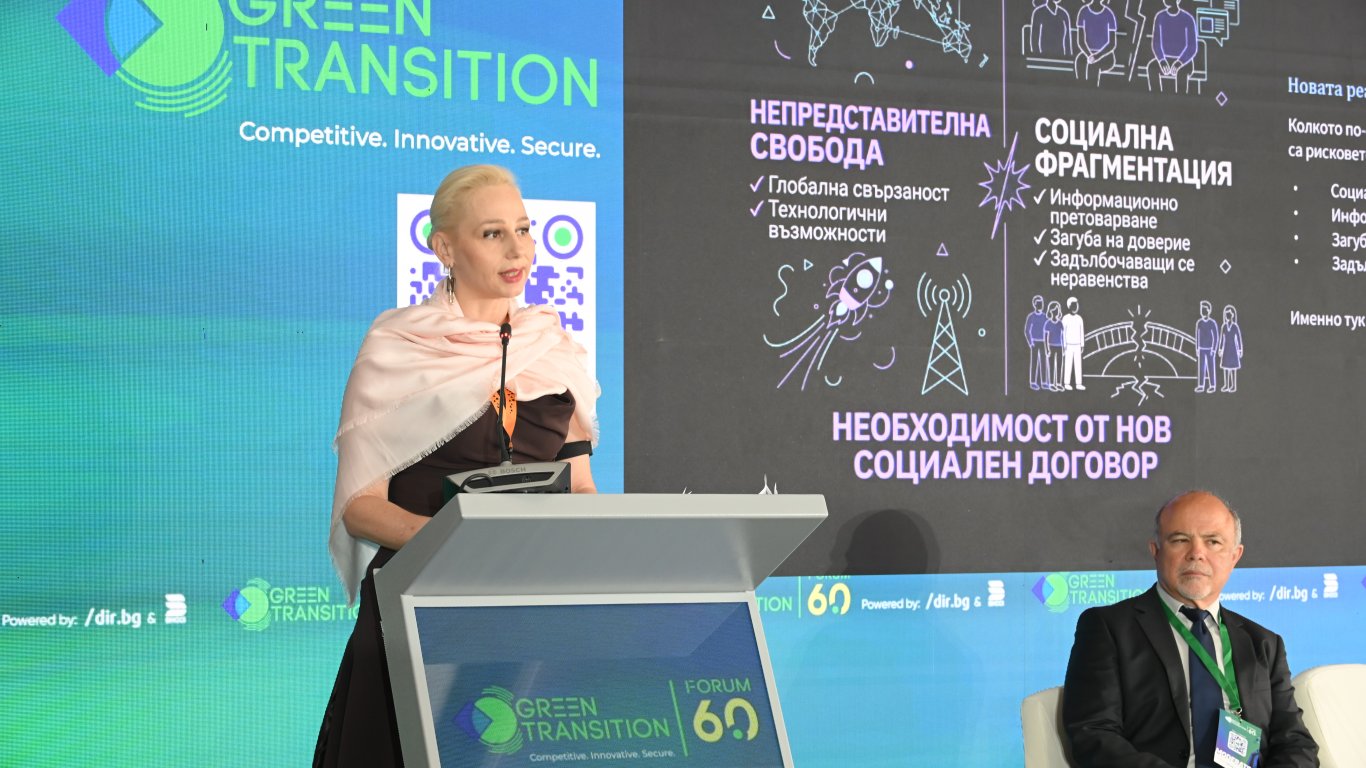
"The new social contract of the 21st century must find a balance between freedom and security, between technological progress and human dignity, between globalization and social sustainability." With these words, Assoc. Prof. Ofelia Kaneva, PhD, a lecturer at Varna Free University "Chernorizets Hrabar", opened her plenary report during the Green Transition Forum 6.0 - one of the most prestigious European events dedicated to sustainable development, innovation, economic transformation and the future of society. According to Assoc. Prof. Kaneva, the greatest risk facing society is not the speed of change, but the lagging behind of institutions in relation to it, DIR.bg. writes.
Modern societies demonstrate a higher ability to adapt to technological and social changes than institutions assume. This is one of the main conclusions in Assoc. Prof. Kaneva's plenary report - "The New Social Contract of the 21st Century", which traces the transition from the values of the 20th century to the challenges of the accelerating global reality.
Other highlights that Ofelia Kaneva put forward are: the need for a development concept that is aligned with the realities of the digital age, the accelerated time and global connectivity; the adaptation of societies, which is faster than that of institutions, which often continue to build policies on outdated notions of social vulnerability and risk; the technological progress, which brings both freedom and uncertainty - more opportunities for participation, but also the risk of social fragmentation, information overload and loss of trust.
The focus also includes topics about young people, who remain a strategic resource, but despite political rhetoric, their participation in decision-making processes remains limited; public-private partnerships and civil society organizations, emerging as key factors for compensating for institutional inertia and building social resilience; transforming trust, social solidarity and adaptability into resources with an importance comparable to economic capital and technology; demographic processes in Europe, which put social systems under pressure, despite data showing that societies manage to maintain high levels of adaptation despite population aging; and last but not least - the balance between freedom and security, which is emerging as the greatest political and social challenge of the 21st century.
Assoc. Prof. Ofelia Kaneva , PhD noted that the new social contract should not be simply a new model of governance, because its success will depend less and less on the resources of the state and more and more on the quality of interaction between institutions, business, civil society and active communities. Its main function is a framework for preserving human dignity in the conditions of an accelerating reality.