

VFU “CHERNORIZETS HRABAR” PROPOSES SOCIAL SUPPORT TO FOLLOW THE STUDENT’S NEEDS, AND TUITION FEES TO FOLLOW THE REAL COSTS
15 july 2026
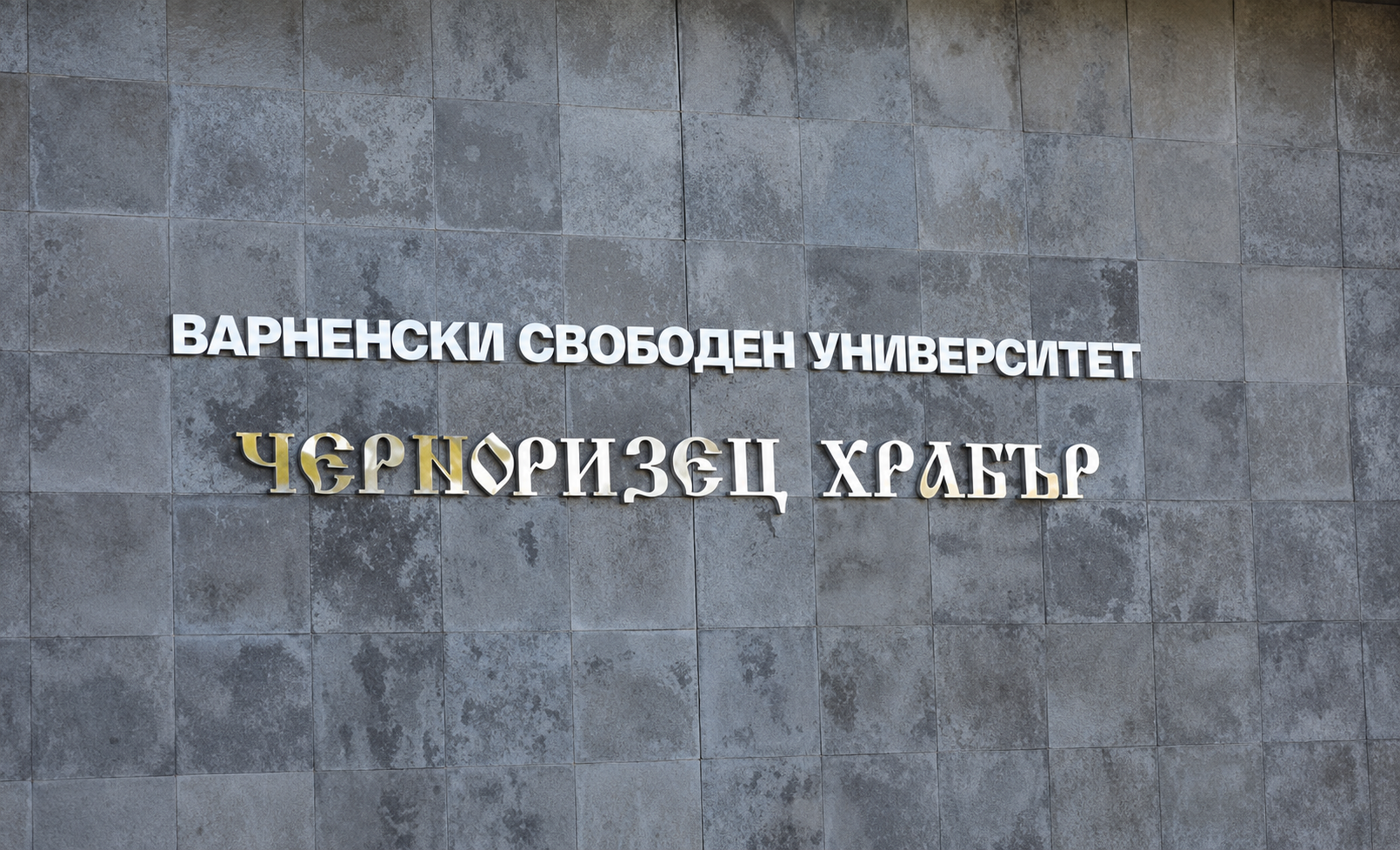
Varna Free University has submitted an opinion on the draft amendment to the Higher Education Act, published by the Ministry of Education and Science. The opinion was submitted within the framework of the announced 14-day public consultation, before the possible submission of the bill for consideration by the Council of Ministers.
Varna Free University “Chernorizets Hrabar” supports the envisaged administrative reliefs, but insists on revising the texts related to social support for students and tuition fees for paid education. According to the university, the proposed approach does not overcome the existing problems with access, quality and equality, but creates additional risks of opacity, unequal treatment and distortion of the competitive environment.
Social support should follow the needs of the student
The main principle that Varna Free University defends is that public social support should be directed at the student, and not to be dependent on the type of higher education institution, the mode of study or the way the place is financed.
The university objects to the proposal to limit access to scholarships and other forms of support from the state budget only to full-time students admitted to subsidised places in state higher education institutions.
“It is not fair for a student with proven social need to be excluded from support solely because he/she studies in a part-time, distance or paid mode, or in an accredited private higher education institution. The scholarship should not be an extension of institutional funding, but a tool for ensuring equal access to higher education,” the opinion states.
VFU “Chernorizets Hrabar” proposes that scholarships and other student-oriented financial support instruments be provided according to objective and publicly disclosed criteria. These may include social status, academic results, belonging to vulnerable groups, training in areas with a shortage of specialists, and other clearly justified public priorities.
Freedom in setting fees, but with transparency and control
The bill envisages that the minimum fee for paid education in state higher education institutions will be reduced from 60 to 50 percent of the funds for the maintenance of the education of students accepted on a state order.
According to VFU “Chernorizets Hrabar”, this decision is not bound to the real cost of education and may deepen the inequality between state and private higher education institutions. It also creates a risk that public funds intended for subsidised education will directly or indirectly support paid educational activities. Such a model raises questions about both the effective and targeted use of budgetary resources and compliance with European rules on state aid and competition protection.
As an alternative, Varna Free University proposes that state higher education institutions should set their own tuition fees, but with clear legal guarantees for separate accounting and management reporting. Also needed is the transparency of the way fees are set, independent auditing and effective control to prevent cross-subsidization between activities financed by the state budget and tuition fees.Thus, academic and financial autonomy will be combined with accountability, transparency and a level playing field.
Changes in fees should be made according to predictable rules
Varna Free University supports the principle that students should have clarity and predictability regarding the amount of fees throughout the entire period of study. However, the university does not consider the fixed ceiling of 20% proposed in the bill to be sufficiently justified, as it does not take into account inflation, the different duration of educational programmes and the real dynamics of costs.
The university’s proposal is that fees can be updated annually based on an objective and publicly verifiable indicator, such as the official consumer price index. Deviation from it should be permissible only in the event of a proven significant change in the cost of education.
Such a mechanism would simultaneously protect students from unpredictable increases and allow higher education institutions to maintain the quality and financial sustainability of education.
A sustainable model, not another partial change
According to VFU “Chernorizets Hrabar”, the bill continues the practice of partial administrative interventions, without offering a comprehensive and sustainable model for financing, social support and equality in higher education.
“Bulgarian higher education needs a system in which public resources are spent transparently, social support reaches students according to their needs, and competition between higher education institutions is based on quality, results and public trust,” the university states.
Varna Free University calls for a broad public and expert debate for a comprehensive modernization of the Higher Education Act. Frequent and fragmented amendments create regulatory instability and hinder long-term planning for both higher education institutions and students and their families.